For your first wine, start with the kind of drink you already enjoy: something sweet, crisp, rounded or fizzy. Choose one of the ten bottles below by that preference, then use your first glass to decide what you would change next time. There is no need to start sweet if you prefer less-sweet drinks, or to move away from sweetness just because you are learning about wine.
The best wines for beginners, by taste
| Start here if you want… | Bottle | Size | Price band |
|---|---|---|---|
| Sweet, gently fizzy white | Pellegrino Zebo Moscato | 750 ml | Under $10 |
| Medium-dry white | Chateau Ste. Michelle Columbia Valley Riesling | 750 ml | Under $10 |
| Semi-sweet, lightly sparkling red | Riunite Lambrusco | 750 ml | Under $10 |
| Dry sparkling wine | Zonin Prosecco DOC | 750 ml | Under $15 |
| Dry white | Santa Margherita Pinot Grigio | 750 ml | $20–25 |
| Zesty, herbal white | Kim Crawford Sauvignon Blanc | 750 ml | Under $15 |
| Oak-influenced white | Kendall-Jackson Vintner’s Reserve Chardonnay | 750 ml | Under $15 |
| Bone-dry rosé | Whispering Angel Côtes de Provence Rosé | 375 ml — half bottle | Under $15 |
| Medium-bodied red | Josh Cellars Santa Barbara County Pinot Noir | 750 ml | Under $20 |
| Soft, rounded red | 14 Hands Merlot | 750 ml | Under $15 |
These are choices by taste, not a ranking. Check the linked page for the current price and select the bottle size shown here before ordering.
Four things to notice in your first glass
“Easy to drink” is a useful starting request, but try to describe what easy means to you. You can use these four cues without learning a long list of tasting terms.
- Sweetness: dry means a wine does not taste sweet; ask for something drier if the sweetness is what you dislike.
- Acidity: the more your mouth waters after a sip, and the longer it lasts, the higher the acidity; ask for less acidity if that sensation feels too sharp.
- Tannin: this is the drying grip most noticeable in reds; ask for less tannin if that feeling puts you off.
- Body: this describes how mouth-filling a wine feels; ask for a lighter or fuller body according to how much weight you want in the glass.
Dryness and a mouth-drying sensation are different things. For more on the first term, see our guide to dry wine.
If you like sweetness
Pellegrino Zebo Moscato: a first bottle for dessert
Zebo has yellow-peach and orange-blossom aromas, and the producer suggests pastry-cream desserts alongside it.
Chateau Ste. Michelle Riesling: a middle option
This Columbia Valley Riesling brings apple and white-peach aromas and flavors, with a subtle mineral note. Its 12% alcohol is higher than Zebo’s 7%, so the sweetness description is not a shortcut to the alcohol percentage. If neither end of the sweet-to-dry scale appeals, start here and see which direction you would like to explore.
Riunite Lambrusco: when you want your wine red
Riunite adds floral notes to a fruit-led style and is bottled at 8% alcohol. Try it if red wine interests you but you would rather keep some sweetness in the glass. For more about this style, read what sweet red wine means.
If you want sparkling wine
Zonin Prosecco DOC: a glass before dinner
Zonin’s Prosecco has a floral aroma that includes wisteria and a light almond note on the finish.
One label detail is easy to get backwards: on Prosecco, Extra Dry is sweeter than Brut. The Prosecco DOC consortium lists Brut below 12 grams of sugar per liter and Extra Dry at 12–17 grams per liter. Use those words when comparing sparkling bottles; “extra” does not mean extra-dry in the everyday sense.
Three different directions for white wine
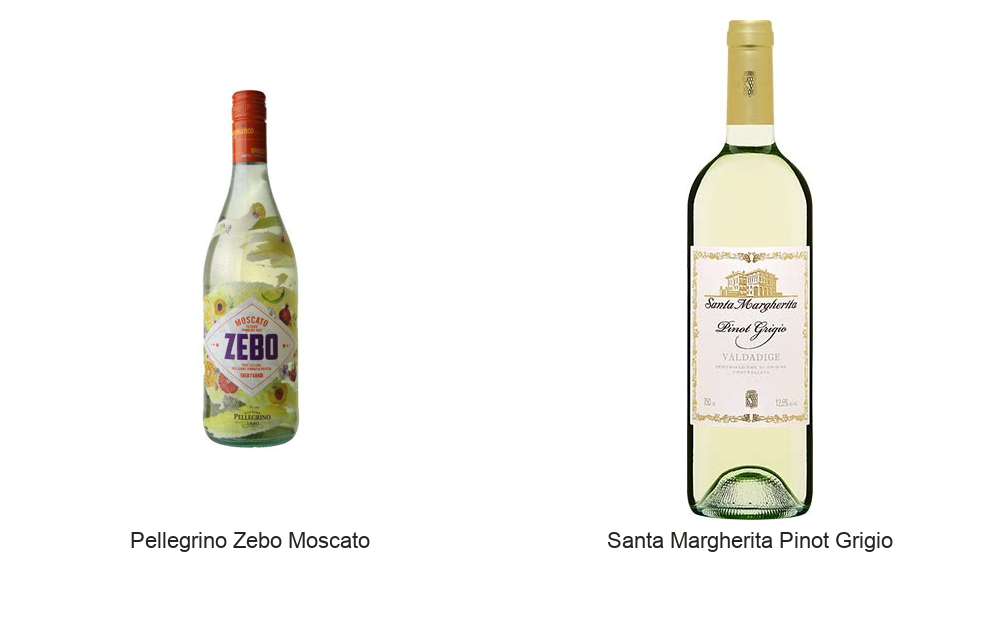
Santa Margherita Pinot Grigio: fruit aroma without sweetness
The Golden Delicious apple aroma here does not make the wine sweet. Fresh cheeses or seafood pasta are suggested pairings. If the grape names on neighboring bottles are confusing, read Pinot Grigio vs. Pinot Gris.
Kim Crawford Sauvignon Blanc: for citrus lovers
Alongside its citrus character, Kim Crawford has tropical-fruit aromas. The producer suggests oysters, lobster or summer salads with it. Use one of those dishes as the reason to choose this bottle, especially if you are planning a first wine-and-food comparison.
Kendall-Jackson Vintner’s Reserve Chardonnay: try the oak style
Kendall-Jackson describes butter and toasted-oak notes as signature features of this Chardonnay. It is fermented and aged with oak. That is a different direction from an unoaked style: oak contact can add flavors such as vanilla, toast and spice. If those notes appeal, try this bottle; if they are what you dislike, ask for an unoaked Chardonnay before deciding against the grape altogether.
A rosé to try with a smaller bottle
Whispering Angel Côtes de Provence Rosé
The producer describes Whispering Angel as full and lush with a smooth finish.
Two reds for dinner
Josh Cellars Santa Barbara County Pinot Noir
This Pinot Noir has red-cherry, pomegranate and cedar flavors, followed by a long, silky finish. The producer suggests roasted vegetables and mushrooms. Roast turkey or duck are other suggested matches if you are choosing wine for a poultry dinner.
14 Hands Merlot
14 Hands brings blackberry, plum, cherry and mocha flavors. BBQ ribs are one of the producer’s suggested matches. It is 14.5% alcohol: a useful reminder that soft texture does not necessarily mean low alcohol. Alcohol contributes warmth and weight, so check that figure as well as the tasting description. You can explore other red styles in our red-wine buying guide.
Check the label before you buy
Check the sweetness description, alcohol percentage and size against what you want from this purchase. Our wine alcohol guide explains the alcohol figure in more detail.
Serve it at a useful temperature
Follow a bottle’s own serving guidance where it is available; use the broader style ranges when it is not.
| Wine | Serving temperature |
|---|---|
| Pellegrino Zebo Moscato | 43–46°F (6–8°C) |
| Santa Margherita Pinot Grigio | 50–54°F |
| Whispering Angel Rosé | 46–54°F (8–12°C) |
| Full-bodied, oaked whites | 50–55°F (10–13°C), WSET guidance |
| Full-bodied reds | 59–64°F (15–18°C), WSET guidance |
WSET notes that chilling white, rosé or sparkling wine below 43°F can mask its flavors. If you have taken a bottle straight from a very cold fridge, let it move toward its recommended range before making up your mind about it.
Check our guide to opened-wine shelf life for storage advice and the differences between styles.
Use two bottles to find your next choice
WSET suggests comparing different styles side by side and keeping tasting notes. For a first comparison, choose two bottles from different rows rather than buying several of the same style. Keep the question small: which glass would you want again?
- Write “too sweet,” “too sharp,” “too drying” or “just right,” then add one thing you liked.
- Save a photo of each label beside its note, so you can identify the bottle later.
- Use the result to choose your next direction: less sweetness, more acidity, less grip or more weight.
For example, if the Moscato leaves you wanting less sweetness, compare it with the Riesling next time; if you enjoyed the Pinot Grigio but want an oak influence, try the Chardonnay. Treat that as an experiment, not a ladder you have to climb.
Beginner wine questions
Should I start with red or white?
If mouth-drying reds have put you off, Pinot Noir generally offers less tannin than Cabernet Sauvignon. A white is another direction to explore; choose by the sensations you enjoy rather than feeling obliged to start with one color.
Does the year on the bottle matter?
The vintage is the year the grapes were harvested. The weather in that year affects the health and quality of the grapes. For a first bottle, ask for something ready to drink now rather than choosing a year in isolation.
Browse our wines with one taste preference and a spending limit in mind.