Champagne comes from its protected French region and gains its bubbles through a second fermentation in the bottle. Sparkling Prosecco comes from northeastern Italy, is made mainly from Glera, and usually undergoes its second fermentation in a pressurized tank.

Champagne vs Prosecco at a glance
| What to compare | Champagne | Prosecco |
|---|---|---|
| Main grapes | Usually Chardonnay, Pinot Noir and Meunier. | At least 85% Glera in white Prosecco DOC. |
| Required time | At least 15 months in the cellar for non-vintage; three years for vintage. | DOC second fermentation: at least 30 days, or 60 days for rosé. |
| Bottle pressure | 5–6 bar. | In Conegliano Valdobbiadene: Spumante at least 3 bar; Frizzante at most 2.5 bar. |
| Is Champagne stronger? | Typically about 12% ABV. | DOC Spumante has an 11% minimum; check the bottle for its actual ABV. |
The time figures describe different requirements: total cellar aging for Champagne and the second-fermentation stage for Prosecco DOC.
What do the names tell you?
An appellation protects both a place and production rules, so the name Champagne is not a general term for bubbles. Prosecco DOC covers nine provinces across Veneto and Friuli-Venezia Giulia. A DOC bottle marked Treviso or Trieste must meet that province’s grape-growing, winemaking and bottling requirements.
Why do some US bottles say “California Champagne”?
US rules preserve certain older uses of Champagne on non-European wine labels, tied to qualifying label approvals before March 10, 2006. Those wines must also state their actual origin alongside the name, which explains wording such as “California Champagne.” Read that geographic wording carefully when you want a bottle from the French appellation.
How do the methods affect taste and fizz?
Before either wine becomes sparkling, yeast converts grape sugars into alcohol to make a still base wine.
In Champagne, adding a mixture called tirage—wine, sugar and yeast—starts the fermentation that produces the bubbles. The spent yeast cells become lees; as they break down, they can contribute brioche, toast, pastry or cream aromas. Riddling gathers the sediment in the bottle’s neck, and disgorgement removes it. Dosage, a mixture of wine and sugar added before corking, helps set the finished sweetness.
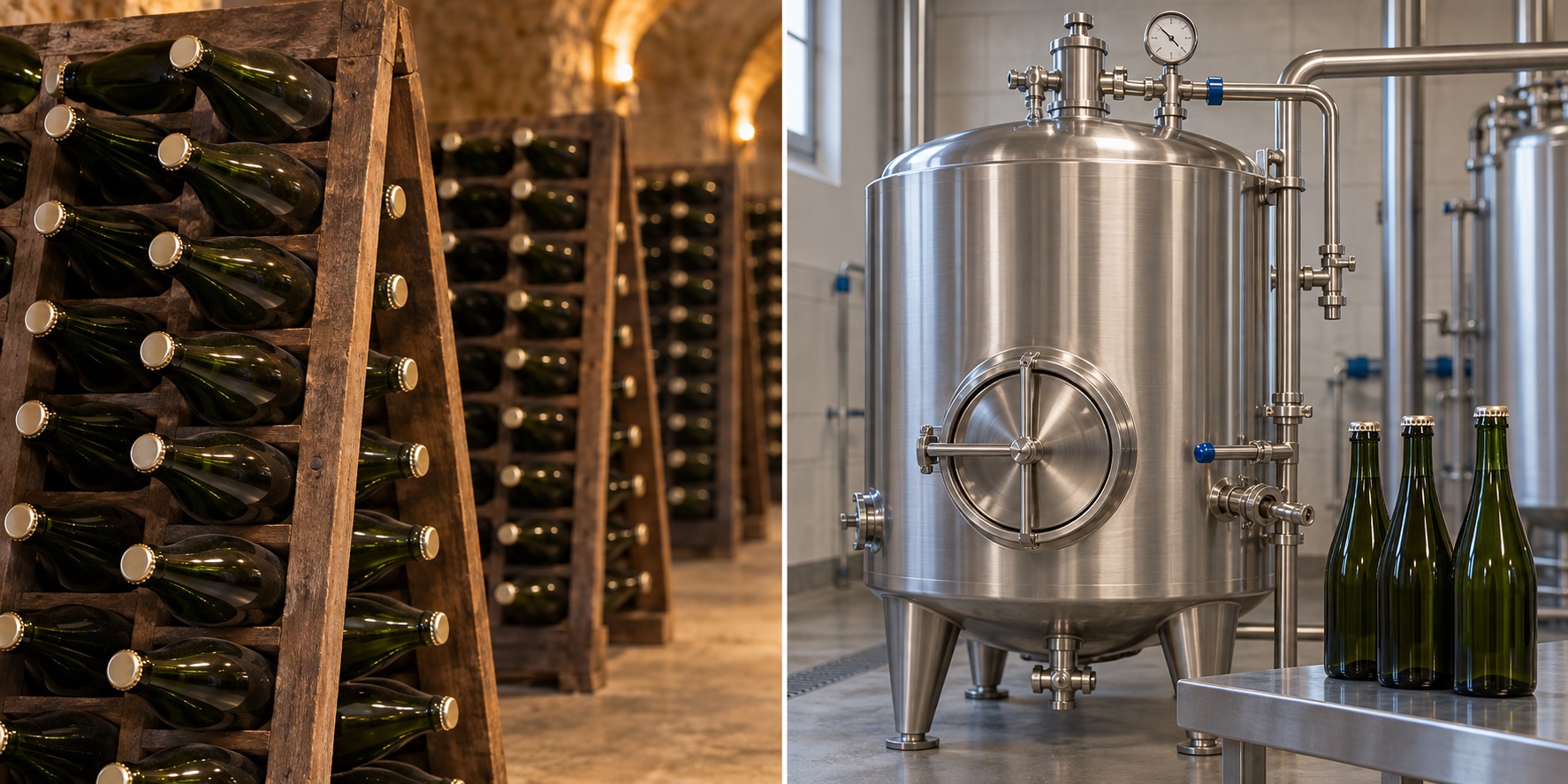
The usual Prosecco process is called the Martinotti or Charmat method. Its shorter contact with lees keeps the emphasis on fruit and aromatic freshness. The Prosecco DOC rules describe white-flower aromas and fruit notes including apple, pear and citrus. These are style tendencies: use the exact bottle’s notes to choose between them.
There are exceptions to the tank-method shorthand: Conegliano Valdobbiadene Sui Lieviti is re-fermented in the bottle and retains its sediment. For a gentler fizz, look for Frizzante rather than Spumante; the pressure limits above show the distinction in Conegliano Valdobbiadene.
Is Prosecco sweeter than Champagne?
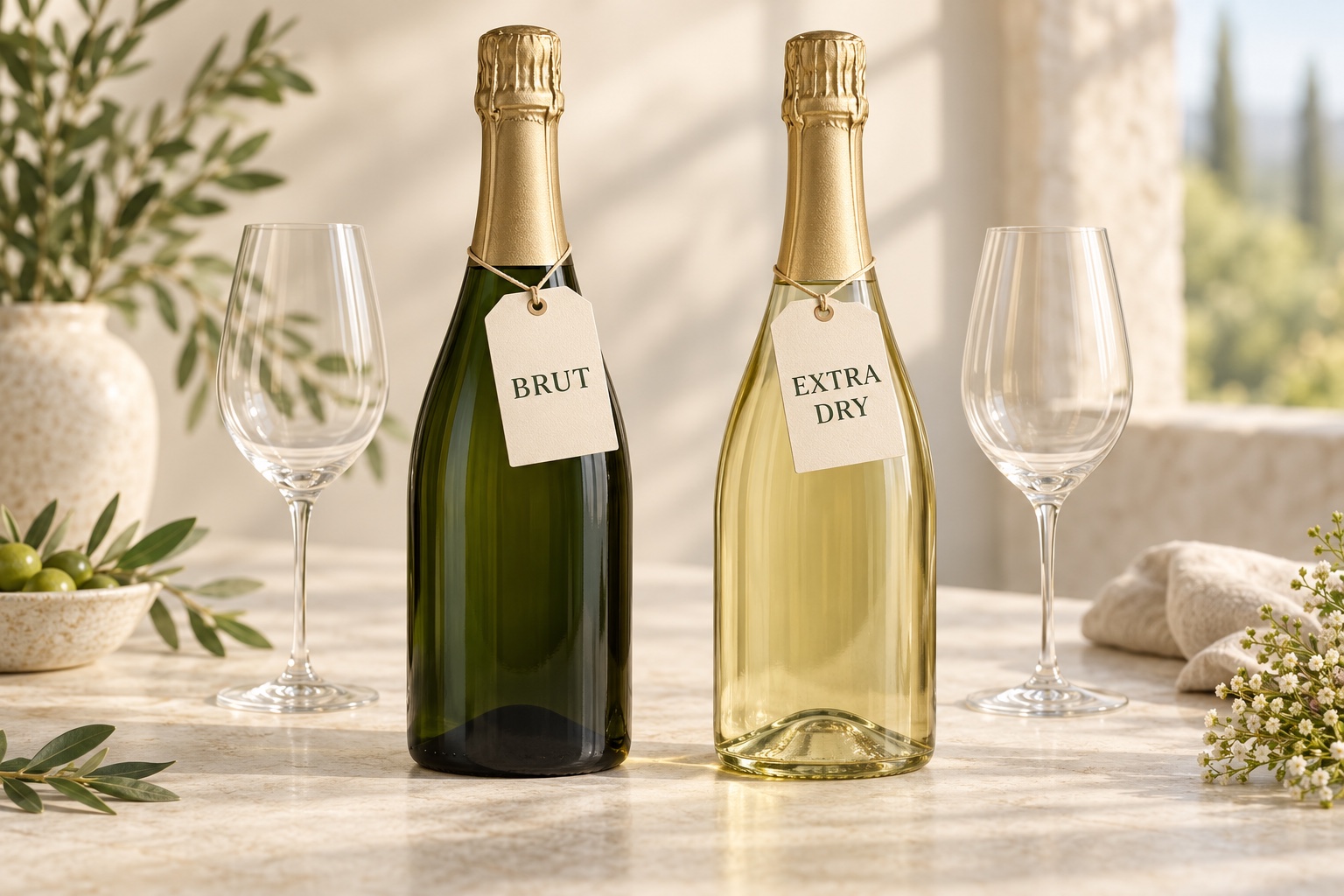
Not necessarily: both wines span several sweetness levels. Extra Dry is sweeter than Brut, despite the wording. Use the label term to narrow your choice before looking at the producer’s sugar figure.
| Label term | Champagne | White Prosecco DOC Spumante |
|---|---|---|
| Brut Nature | Below 3; no sugar added after the second fermentation. | Below 3; no sugar added after the second fermentation. |
| Extra Brut | 0–6. | 0–6. |
| Brut | Below 12. | Below 12. |
| Extra Dry | 12–17. | 12–17. |
| Sec / Dry | Sec: 17–32. | Dry: 17–32. |
| Demi-Sec | 32–50. | 32–50. |
| Doux | More than 50. | Not a listed DOC Spumante style. |
Prosecco DOC Rosé uses only the drier part of that range, from Brut Nature through Extra Dry.
Why does Champagne usually cost more?
WSET links the generally lower prices of tank-method wines to faster production and less labor. The cellar time and individual-bottle work described above help explain the difference. Set a budget for the occasion, then compare bottles within it; price alone cannot tell you which style you will enjoy.
Label styles worth knowing
On Champagne bottles
| Term | Meaning |
|---|---|
| Non-vintage / NV | A blend of wines from different harvests. |
| Vintage | Made entirely from grapes harvested in the year shown. |
| Blanc de Blancs | Made only from white grapes, such as Chardonnay. |
| Blanc de Noirs | Made only from dark-skinned grapes, such as Pinot Noir or Meunier. |
| Rosé | Made by macerating dark grapes or blending with red Champagne wine. |
On Prosecco bottles
| Term | Meaning |
|---|---|
| Tranquillo | Still. |
| Conegliano Valdobbiadene Prosecco Superiore DOCG | A defined hillside denomination covering 15 communes. |
| Rive | Grapes from one commune or part of it; hand-picked, with the vintage shown. |
| Superiore di Cartizze | A 107-hectare subzone within Valdobbiadene. |
| Asolo Prosecco Superiore DOCG | A separate hillside area in Treviso province, west of the Piave. |
| Prosecco DOC Rosé | 85–90% Glera and 10–15% Pinot Nero. |
| Millesimato on DOC Rosé | A required vintage statement; at least 85% of the grapes come from that year. |
On a Prosecco label, keep the place and the sweetness term separate: Rive or Cartizze identifies where the grapes grew, while Brut or Extra Dry describes the sugar level. That lets you explore a more specific vineyard area without losing track of the style you meant to buy.
Which should you choose for food or cocktails?
With a meal
The Prosecco Superiore consortium suggests Brut with seafood pasta, vegetable appetizers or baked fish; Extra Dry with creamy cheeses or poultry; and Dry with dry pastries or spicy fusion dishes. Treat those as starting points for matching the style to your menu.
For Champagne, the house’s pairing suggestions can be more useful than a blanket rule: Veuve Clicquot pairs Yellow Label with burgers and maki, while Moët recommends Nectar Impérial with spicy dishes, including Thai cuisine.
For mimosas and other cocktails
Prosecco is an official recipe ingredient, not merely a Champagne substitute: the International Bartenders Association specifies it in the Mimosa, Bellini and Spritz. Its Mimosa uses equal measures of freshly squeezed orange juice and Prosecco; its Bellini uses two parts Prosecco to one part white-peach purée. For a Spritz, the IBA combines 90 ml Prosecco with 60 ml Aperol and a splash of soda water. For a French 75 or Kir Royal made to the IBA specification, choose Champagne.
How should you serve and store them?
Serve Champagne at 46–50°F (8–10°C); for Conegliano Valdobbiadene Prosecco Superiore, the consortium recommends 43–46°F (6–8°C). Both bodies favor a tulip-shaped glass with room for aromas, rather than an extremely narrow flute.
To chill Champagne, the Comité recommends an ice bucket filled half with water and half with ice for 30 minutes, or a few hours at the bottom of the refrigerator. For longer storage, choose a dark, ventilated space around 50–59°F (10–15°C); the refrigerator is for chilling rather than keeping a bottle indefinitely.
Keep unopened Prosecco Superiore somewhere cool and dry, away from light and heat, and aim to enjoy it in the year after harvest, as its consortium recommends. For opened Champagne, fit an airtight sparkling-wine stopper immediately; the Comité Champagne advises keeping it for one or two days.
What about Crémant and Cava?
For bottle-fermented alternatives to Champagne, explore Crémant, made in several French regions, or Spain’s Cava.
Freixenet Cordon Negro Brut Cava is an under-$20 example: its producer lists 12–18 months of aging and a blend of Macabeo, Xarel·lo and Parellada. Expect producer-described apple, ripe pear and citrus flavors.
Five Champagne and Prosecco bottles to compare
A Brut and Extra Dry from the same producer
Mionetto Prestige Prosecco Brut, 750 ml is under $20, made entirely from Glera, with producer-described golden-apple, honey and white-peach aromas. Mionetto recommends it as an aperitif, with a meal or in cocktails.
Mionetto Prestige Prosecco DOC Organic Extra Dry is also under $20, with 14–17 g/L of sugar and elderflower and green-apple notes. The producer suggests prosciutto with melon alongside it.
A Prosecco Superiore DOCG to drink with appetizers
Nino Franco Rustico is a Valdobbiadene Prosecco Superiore DOCG under $30, with Williams-pear and white-flower aromas. Try it with finger food or fresh cheese, following the producer’s suggestions.
Two distinct Champagne sweetness levels
Veuve Clicquot Yellow Label Brut Champagne has a 9 g/L Brut dosage and notes of pear, peach, citrus and brioche.
Moët & Chandon Nectar Impérial Champagne shows why Champagne need not be the drier choice: this Demi-Sec has 45 g/L of sugar, with pineapple and mango aromas. Consider it if your preference runs toward a sweeter bottle.