For salmon, start with light Pinot Noir if you want red, Chardonnay if you want white, or sparkling wine for a smoked-salmon plate. Buying just one bottle for several preparations? Consider dry rosé: it appears among the options for grilled, smoked and sushi salmon.
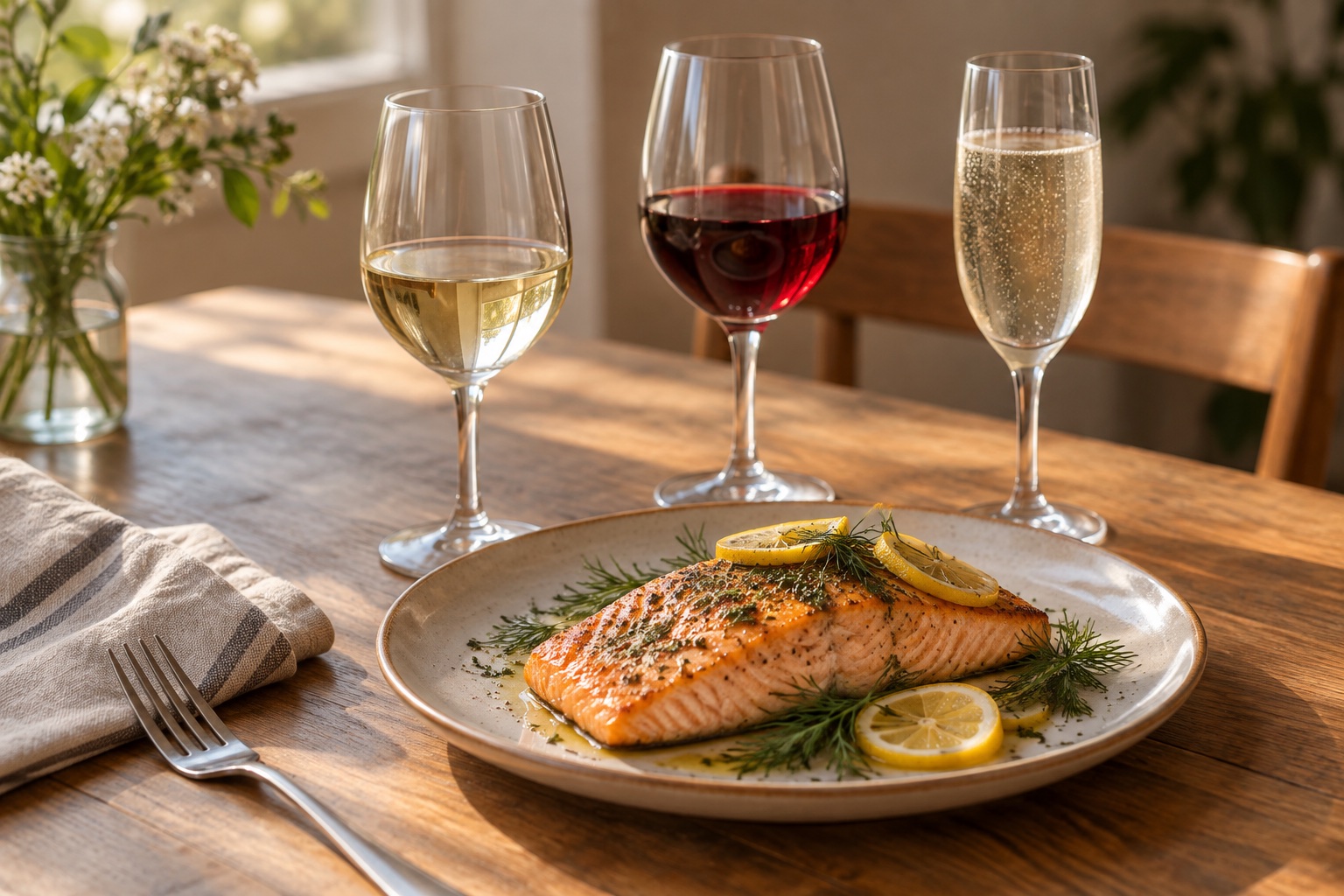
Wine with salmon at a glance
| Your dish | Try first | Alternative or buying cue |
|---|---|---|
| Grilled or seared | Light Pinot Noir | Chardonnay, Albariño or Beaujolais |
| Blackened or Cajun salmon with chili heat | Off-dry Riesling | Keep alcohol and tannin modest |
| Baked or roasted | Chardonnay | Pinot Gris or Viognier |
| Poached salmon | A fresh, soft wine | Choose by the sauce if there is one |
| Butter or cream sauce, including creamy pasta or chowder | Chardonnay with a little oak | A sparkling wine for a different direction |
| Smoked salmon | Brut sparkling wine | Riesling or Provence rosé |
| Salmon sushi | Provence rosé | Chablis, Albariño or Sauvignon Blanc |
| Tartare or carpaccio | Rosé of Pinot Noir | Pinot Gris for carpaccio |
| Lemon and herbs, including lemon-led piccata | Sauvignon Blanc | Use the citrus and herbs as your guide |
| Teriyaki or ginger-spiced salmon | German Riesling or Alsace Pinot Gris | For a sweet glaze, check the wine’s sweetness |
| Fried salmon cakes or burgers | Cava | A suggestion for the crisp, oily coating |
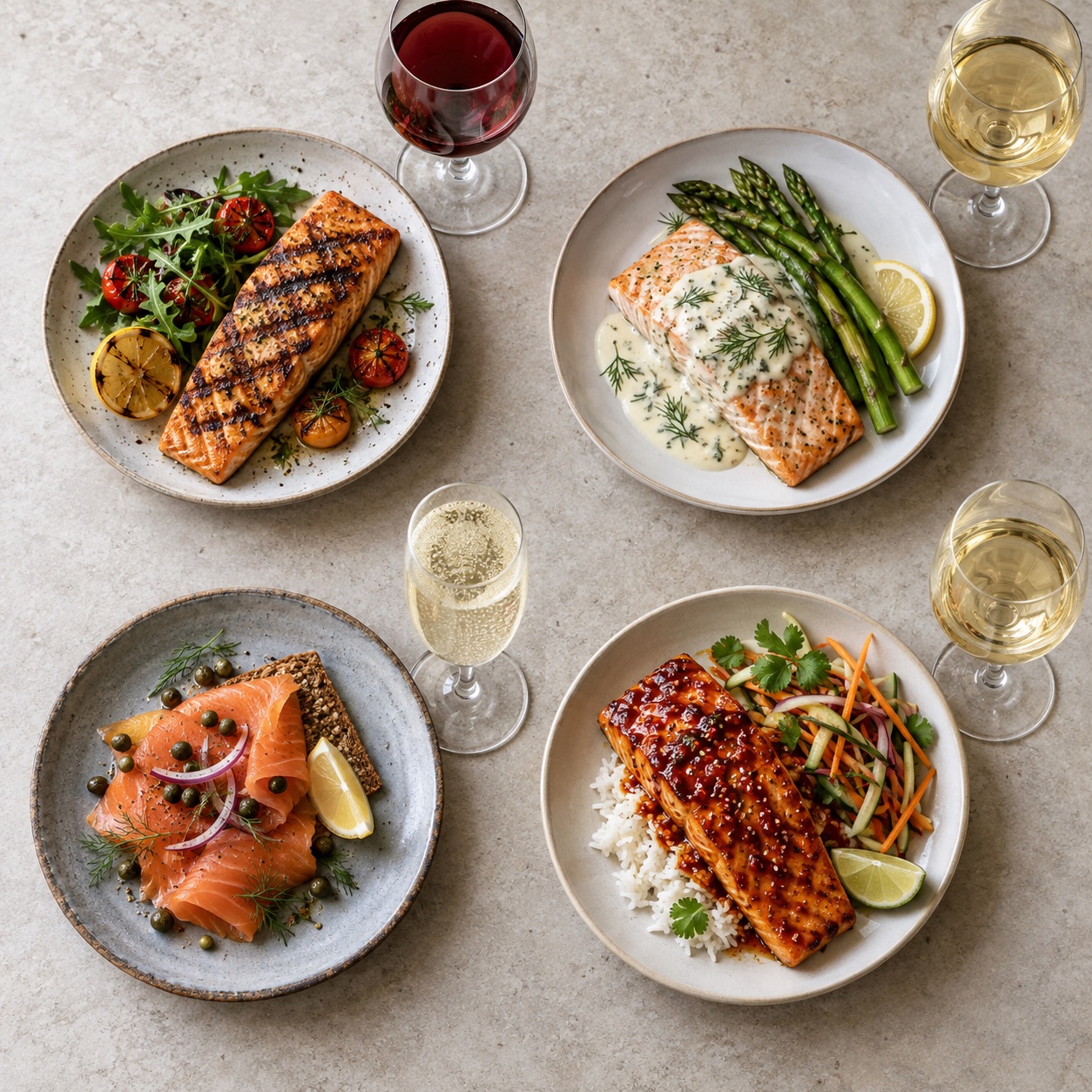
What changes the pairing
WSET’s food-pairing guidance often suggests high-acid wines with oily or fatty foods because they can make the mouthful feel fresher.
A sweet glaze can make wine taste less fruity, drier and more bitter, so a very dry bottle may be less forgiving than a sweeter one. Chili, meanwhile, intensifies the perception of alcohol; a little sweetness in the wine can soften the heat.
The fish itself varies, too: NOAA describes Chinook salmon as rich and buttery, while pink salmon is generally lean and mild because of its low oil content.
Grilled, seared or blackened salmon
Consider La Crema Willamette Valley Pinot Noir: La Crema specifically pairs it with Pacific Northwest salmon. Our 750 ml bottle falls under $30.
If you want a smaller bottle for grilled salmon, Barefoot Pinot Noir comes in a 187 ml format in our range, and Barefoot names grilled salmon among its pairings.
Making cedar-plank salmon or a crispy-skinned fillet? Start with the grilled or seared row, then account for any glaze or spice rub. For a chili-heavy blackened crust, lower-tannin wines are a useful precaution: WSET notes that tannin can feel harsh alongside hot spices. Heavy oak can also seem bitter or dominant with spice, so keep it restrained.
Baked, poached or in a cream sauce
La Crema Monterey Chardonnay is the winery’s named recommendation for baked salmon, with our 750 ml bottle under $20. For a still-white alternative, La Crema also recommends its Monterey Pinot Gris with baked salmon and salmon salad; that 750 ml bottle is under $20 too.
With butter or cream, you can choose between contrast and a closer texture match: a wine with brisk acidity, or one with freshness and a little creaminess from oak or time on lees. That is the useful distinction when choosing for salmon pasta or chowder whose sauce is predominantly creamy. Keep the oak proportionate: Wine Spectator cautions that heavily oaked Chardonnay can overwhelm salmon’s relatively mild flavors.
Smoked, cured or raw salmon
For a smoked-salmon starter, Freixenet Cordón Negro Brut Cava is a 750 ml sparkling option under $15. It also belongs on the shortlist for fried salmon cakes: Freixenet recommends this wine with crunchy dishes such as fish and chips, and WSET suggests Cava with oily fried foods. The producer recommends serving it at 6–8°C.
Prefer a still wine with sushi? Whispering Angel is a Provence rosé described by its producer as bone dry with a smooth finish. Our 750 ml bottle is under $25.
For carpaccio, the Monterey Pinot Gris above is La Crema’s exact bottle recommendation; its guide also suggests Chardonnay or sparkling wine for that preparation. With a poke bowl, use the dressing to decide which guidance to follow: citrus, sweet glaze or chili.
Lemon, herbs, glazes and spice
If asparagus is part of dinner, consider Kim Crawford Sauvignon Blanc: its producer explicitly recommends the wine with asparagus. Our 750 ml bottle is under $15, and a 375 ml option is also available.
For salmon with wasabi or garlic, consider the German Riesling or Alsace Pinot Gris options too. Treat miso or soy glaze according to the finished sauce: follow the sweetness guidance when it tastes sweet, and the chili guidance when it is hot.
Chateau Ste. Michelle Columbia Valley Riesling is a Washington option for a gently sweet or spicy preparation, with our 750 ml bottle under $10. The producer calls it medium-dry and describes apple and white-peach aromas and flavors. Use that stated sweetness when deciding whether it suits your sauce; do not assume that any bottle labeled Riesling will taste the same.
Can you drink red wine with salmon?
Yes, and when choosing between Pinot Noir and Cabernet Sauvignon, a lighter Pinot is the more forgiving starting point. Decanter recommends lighter styles such as Beaujolais and New World Pinot Noir, while Wine Spectator advises steering away from bigger, tannic wines such as young Cabernet. Serve a light-bodied red lightly chilled if you prefer; WSET lists that alongside room-temperature service.
What about a fishy aftertaste? A 2009 study linked its intensity to iron in wine during an experiment with dried scallops. The researchers also increased the aftertaste by adding ferrous iron in model wine and suppressed it by binding the iron in red wine. This does not establish a salmon-specific rule or show that tannin causes the effect.
Picking a substitute bottle
Read the sweetness term as well as the grape name. On Champagne, “Extra Dry” is sweeter than “Brut”: Comité Champagne gives 12–17 grams of sugar per liter for the former and less than 12 for the latter. For still wines, use the producer’s stated style or sweetness scale; our guide to dry wine explains the terms.
All eight bottles were in stock when checked; price bands refer to the sizes specified above. Check the current product page before buying.
Browse our salmon-pairing selection or wines for sushi, or tell our team how you are cooking the fish, what sauce you are serving and which wine styles you enjoy.