Wine, hard cider and pure distilled spirits are generally gluten-free; traditional barley or wheat beer and fermented barley-malt drinks are not. The important exception is what happens after the base alcohol is made: added ingredients and cross-contact can change the answer for a finished drink.
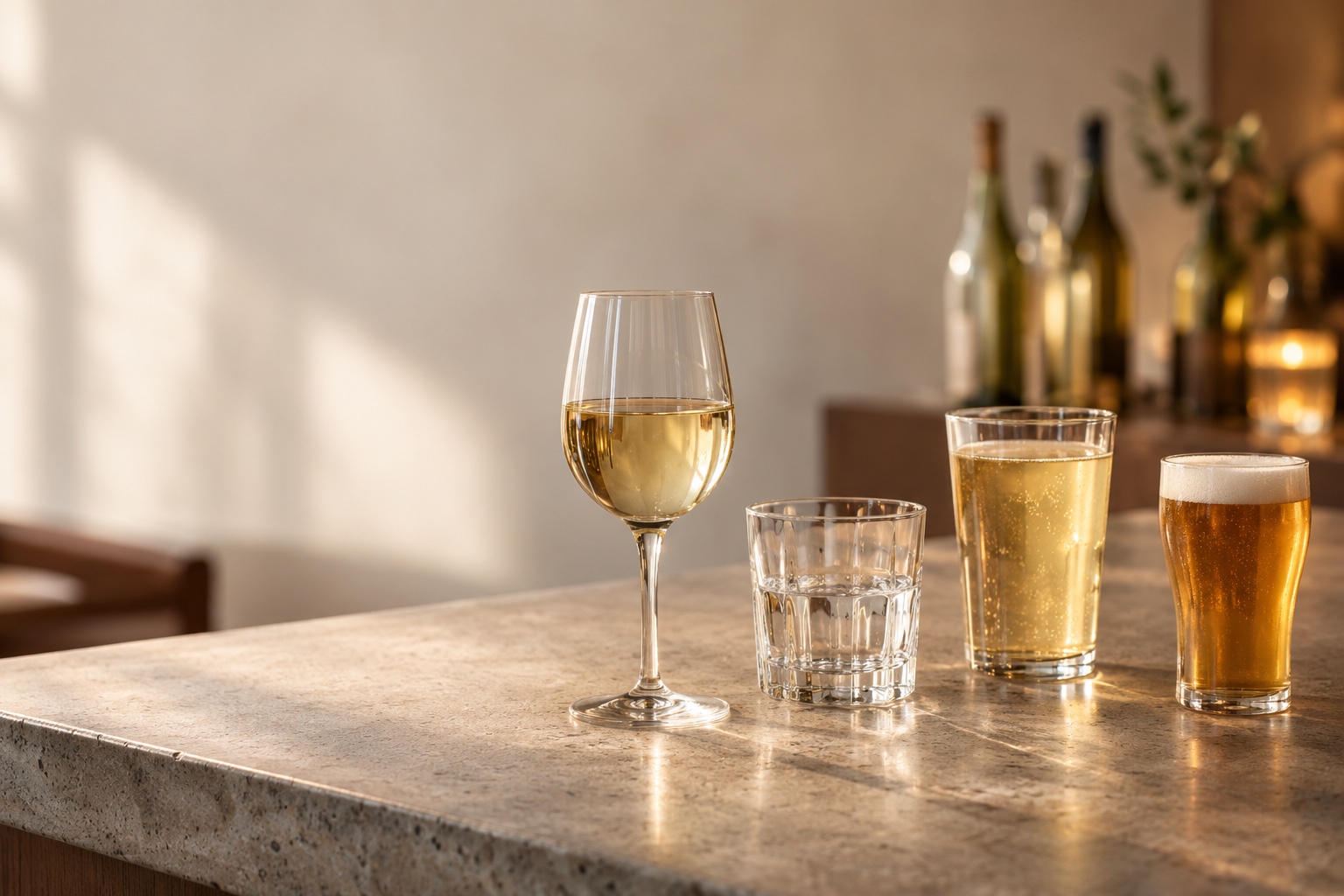
Gluten-free alcohol at a glance
| Drink | Usual status | What to check |
|---|---|---|
| Still and sparkling wine | Generally gluten-free | Flavored wine and wine-based cocktails need a separate ingredient check. |
| Port and sherry | Gluten-free categories | Use the separate guidance below for vermouth. |
| Hard cider | Generally gluten-free | Check additions to flavored cider. |
| Pure distilled spirits | Generally gluten-free | Vodka, gin, whiskey, rum, tequila and brandy follow the distillation rule. |
| Sake | Premium sake is considered gluten-free | Look for a premium grade, rather than relying on “rice wine.” |
| Liqueurs, flavored spirits and canned cocktails | Depends on the finished recipe | Check additions, not just the base spirit. |
| Traditional barley or wheat beer | Not gluten-free | Fermentation does not remove gluten. |
| Gluten-free beer | Made to meet gluten-free requirements | Distinguish it from a beer labeled “processed to remove gluten.” |
Why grain spirits differ from beer
Wheat, barley and rye are gluten-containing grains, but the raw material is only part of the explanation. The FDA describes distillation as a separation process: alcohol and other volatile components are recovered apart from nonvolatile material such as proteins.
Properly performed, it can remove all gluten protein; the FDA also cautions that poor manufacturing practices can transfer gluten into the distillate. For US labels, TTB Ruling 2020-2 allows a gluten-free claim on a spirit distilled from gluten-containing grain when the required manufacturing controls prevent gluten entering the final product.
Is vodka gluten-free?
Pure vodka made from wheat, barley or rye is considered gluten-free, according to Beyond Celiac.
Is gin gluten-free?
Gin falls under the same rule for distilled spirits: a grain base does not by itself disqualify it from being gluten-free. For a flavored gin or a premixed gin drink, use the additions check below.
Is whiskey, bourbon or Scotch gluten-free?
The distillation principle applies to pure whiskey, including bourbon, rye and Scotch; Coeliac UK specifically includes malt whisky made from barley in its guidance. Seeing barley or rye mentioned in a whiskey’s production information is therefore different from finding those ingredients in an undistilled beer.
Are rum, tequila and mezcal gluten-free?
Beyond Celiac considers pure distilled rum and tequila gluten-free and identifies their usual starting materials as sugarcane molasses or juice, and blue agave, respectively. For a pure distilled mezcal, the FDA’s protein-removal explanation applies too; it is the distillation step, rather than a special exception for a particular plant, that matters.
Are brandy and cognac gluten-free?
Pure distilled brandy, including cognac, belongs in the distilled-spirit category rather than the fermented-beverage category when you assess gluten. Keep a brandy-based liqueur separate from a plain brandy when checking the bottle.
Wine, fortified wine, cider and sake
Wine and fortified wine
Red, white and sparkling wines, including Champagne and Prosecco, are generally gluten-free. Concerned about old-fashioned wheat paste in barrels? The Celiac Disease Foundation says wines exposed to it are unlikely to contain enough gluten to cause a reaction, including historically associated styles such as Madeira and muscatel.
For vermouth, check the exact product information rather than extending the port-and-sherry answer to every flavored wine.
Hard cider
One specific cider exception is worth recognizing: the National Celiac Association lists flavored hard cider containing malt among drinks that are not gluten-free. That makes the ingredient check more useful than choosing by an apple picture or fruit-flavor name.
Cider below 7% ABV must comply with FDA ingredient, nutrition and allergen labeling requirements, according to TTB’s cider guidance. So do not apply the optional-allergen-label rule for stronger, TTB-regulated drinks to every cider can on the shelf.
Is sake gluten-free?
Beyond Celiac’s sake guidance distinguishes premium sake from non-premium sake, which may include additives or flavorings containing gluten. Junmai, honjozo, ginjo and daiginjo are among the premium grades it identifies.
At a restaurant, ask for the bottle or grade if the menu only says “house sake”; that wording does not tell you which category you are being served.
Gluten-free beer versus gluten-removed beer
During fermentation, proteins break into smaller fragments called peptides, which conventional tests may not accurately detect and measure. This helps explain why a negative result from the wrong kind of test is not a reliable basis for treating a barley beer as gluten-free.
Gluten-free beers can use alternatives to malted barley, such as sorghum malt. A barley beer treated with a gluten-reduction process is a different proposition: under TTB rules it may carry a qualified “processed,” “treated” or “crafted to remove gluten” statement.
The accompanying statement must explain that the product was fermented from gluten-containing grains, its gluten content cannot be verified, and it may contain gluten. The National Celiac Association advises people following a gluten-free diet to avoid gluten-reduced beers.
Hard seltzers, hard lemonade and canned cocktails
Start by identifying the alcohol base: a drink made with fermented barley malt does not become gluten-free because it is sold as a fruity, sparkling or ready-to-drink beverage. For a spirit-based can, the relevant question moves to the rest of the recipe, because premixed cocktails can contain gluten-bearing additions.
Apply that distinction to hard lemonade and hard tea too: the flavor name alone is not an ingredient list. When comparing cans, find the product’s description of its base and its gluten-free information before choosing a flavor.
Liqueurs and flavored spirits: what gets added?
A distilled base does not settle the status of a cream liqueur, a dessert-flavored spirit or a cocktail containing either. For a TTB-regulated gluten-free claim, the producer must be able to substantiate the absence of gluten in added ingredients and precautions against cross-contact, as well as the absence of protein in the distillate.
How to read a US alcohol label
“Gluten-free” is a voluntary regulated claim, not a requirement for every eligible product to print those words. Under the FDA definition, unavoidable gluten must be below 20 parts per million, and the permitted ingredients must also meet the rule; a low test result alone does not override those ingredient restrictions.
TTB covers all distilled spirits, wine at 7% ABV or higher, and malt beverages made with both malted barley and hops; other products, including lower-alcohol wines and ciders, fall under FDA labeling requirements. That division matters for allergen statements: TTB’s current rules make major-allergen disclosure optional, so a missing “Contains: wheat” statement on a TTB-regulated bottle is not proof of absence.
Its major-allergen list includes wheat, but not barley or rye.
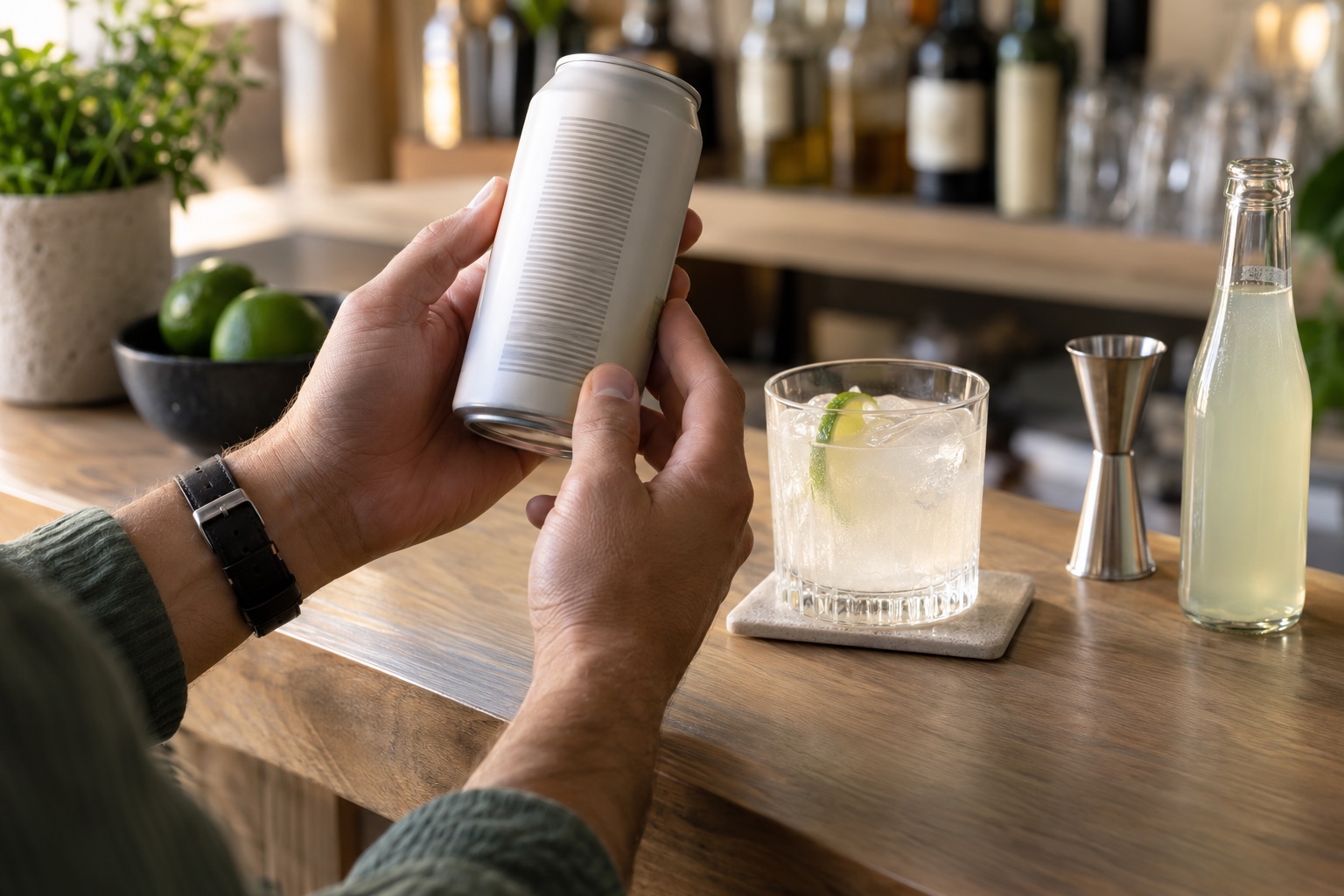
- Look for the gluten-free wording on the exact bottle or can, then read any qualifying statement beside it.
- Do not substitute “wheat-free”: barley and rye are also gluten sources.
- If there is a certification mark, identify the certifier: GIG’s GFCO program includes ingredient testing at or below 10 ppm and annual facility audits.
- If the information is unclear, contact the producer about the exact expression and flavor, including its ingredients and cross-contact controls, before relying on it.
Certification and the legal label claim are related but separate: the FDA allows truthful third-party certification logos, yet does not endorse, accredit or recommend a particular certification program. A symbol is therefore worth identifying by name rather than assuming any gluten-free-looking badge represents the same checks.
Ordering a cocktail at a bar
Ask the bartender to identify every mixer and liqueur in your order, including any premade mix, so you can apply the same ingredient check you would use at home. Preparation deserves a separate question: the Celiac Disease Foundation identifies shared utensils as a route for cross-contact.
Applied to a bar, that means asking how the glass and mixing tools are cleaned and handled, rather than checking only the bottle poured into them.
Four spirit bottles to compare
These bottles are examples of different ingredients and styles, not a verified gluten-free shortlist. For each one, use the finished-product checks above before choosing it for a gluten-free diet.
| Bottle | What distinguishes it |
|---|---|
| Tito’s Handmade Vodka | Distilled from corn. |
| Chopin Potato Vodka | The potato expression in a range that also includes rye and wheat vodkas. |
| Patrón Silver | Made with Blue Weber agave, yeast and water. |
| BACARDÍ Añejo Cuatro | A rum aged in oak barrels. |


Browse our wine, hard cider, vodka and rum ranges for more options.