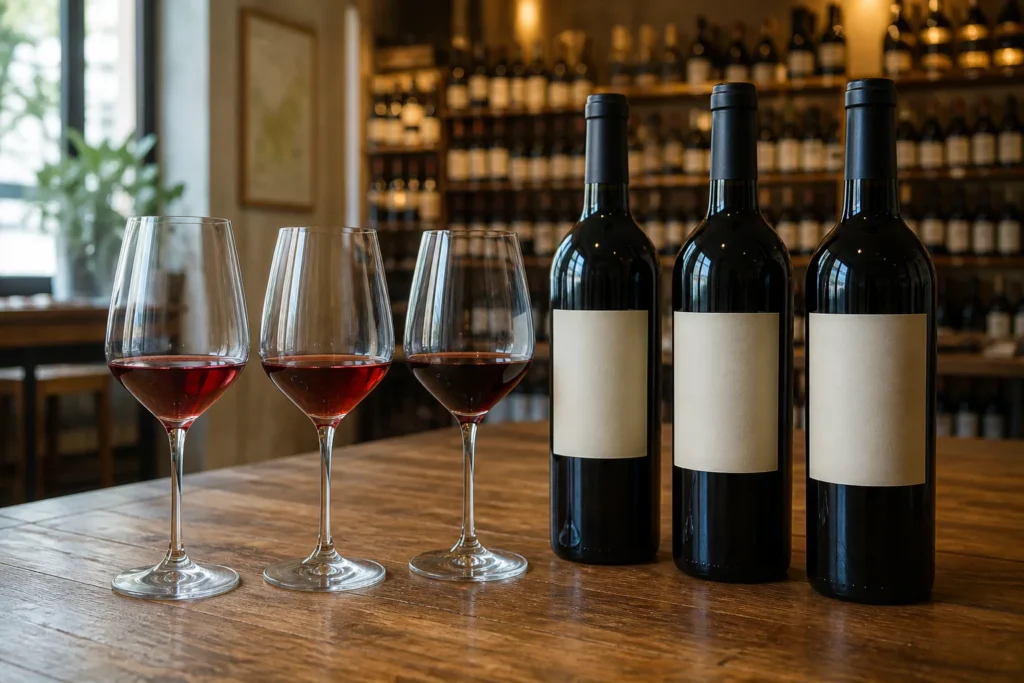
For medium- and full-bodied reds, start at 59–64°F (15–18°C); for light- and medium-bodied whites and rosés, start at 45–50°F (7–10°C). The wine’s style matters more than its color alone: a light red, an oaked white and a sweet wine need different degrees of chilling.
Wine serving temperature chart
| Wine style | °F | °C | Examples |
|---|---|---|---|
| Sweet wine | 43–46°F | 6–8°C | Sauternes; sweet German Riesling |
| Sparkling wine | 43–50°F | 6–10°C | Champagne; Prosecco; Cava |
| Light- or medium-bodied white and rosé | 45–50°F | 7–10°C | Pinot Grigio; Sauvignon Blanc; Chablis |
| Full-bodied white | 50–55°F | 10–13°C | Oaked Chardonnay |
| Light-bodied red | About 55°F | About 13°C | Beaujolais; lighter Pinot Noir |
| Medium- or full-bodied red | 59–64°F | 15–18°C | Shiraz; Cabernet Sauvignon; Merlot |
These starting points follow the Wine & Spirit Education Trust’s service guidance, with Fahrenheit values rounded from Celsius. Use a producer’s bottle-specific recommendation when available, and leave room for personal preference.
Why temperature changes how wine tastes
Temperature affects how you experience sweetness, acidity, tannin, alcohol and body.
| If the wine is too cold | If the wine is too warm |
|---|---|
| White, rosé and sparkling flavors can become harder to detect below about 43°F (6°C). | Full-bodied reds can lose freshness and seem muddled above about 64°F (18°C). |
| Red-wine tannins may feel firmer or more astringent. | Alcohol and body become more prominent. |
Virginia Tech’s enology guidance explains another useful effect: chilling reduces perceived sweetness and makes acidity more noticeable. That helps explain the cooler starting point for sweet wines in the chart.
Red wine: should you chill it?
Yes—especially lighter reds with relatively little tannin, such as Beaujolais and lighter styles of Pinot Noir. The usual instruction to serve red wine at room temperature can be misleading: WSET contrasts a conventional room at about 68°F (20°C) with the cooler range intended for wine. Heating and air-conditioning also make room temperatures variable, so use the chart rather than assuming the dining room is the right temperature.
If a fuller red has become too warm, cooling it can restore its balance, provided it has not been heated too quickly.
White, rosé and sparkling wine: how cold is cold enough?
The FDA recommends keeping a food refrigerator at 40°F (4°C) or below, which is colder than every starting point in the chart. A bottle that has chilled to that temperature needs some time out before serving within those ranges.
For Santa Margherita Pinot Grigio, the producer recommends 50–54°F (about 10–12°C), a little warmer than the general light-white band.
For Provence rosé, Vins de Provence recommends 46–50°F (8–10°C). Comité Champagne gives the same range for Champagne, within the broader sparkling-wine band above.
Riesling can be dry, medium or sweet, so the grape name alone does not tell you which row to use. For a dry Riesling, use the light- or medium-bodied white range; for a sweet version, begin with the sweet-wine range unless the producer advises otherwise.
Sweet wines, Port and Sherry
For a sweet wine with a gentle sparkle, Pellegrino Zebo Moscato has its own producer recommendation of 43–46°F (6–8°C).
| Fortified style | °F | °C |
|---|---|---|
| White Port | 43–50°F | 6–10°C |
| Tawny Port | 50–57°F | 10–14°C |
| Ruby-style Port | 54–61°F | 12–16°C |
| Fino and Manzanilla Sherry | 41–45°F | 5–7°C |
| Pale Cream Sherry | 45–48°F | 7–9°C |
| Other oxidatively aged Sherries and blends | 54–57°F | 12–14°C |
| VOS and VORS Sherry | About 59°F | About 15°C |
The Port ranges come from the Port and Douro Wines Institute; the Sherry ranges follow the Sherry regulatory council’s general serving guide. The council’s separate Fino page suggests 43–46°F (6–8°C), so its two guides differ slightly.
For a tawny example, the producer of Dow’s 10 Year Old Tawny Port recommends serving it slightly chilled.
How to chill wine quickly—or plan ahead
An ice-water bucket works better than ice alone because air gaps insulate the bottle, while water transfers heat from the glass to the ice.
- Fill a bucket three-quarters full with equal quantities of ice and water.
- Set the bottle in it so that the iced water surrounds it.
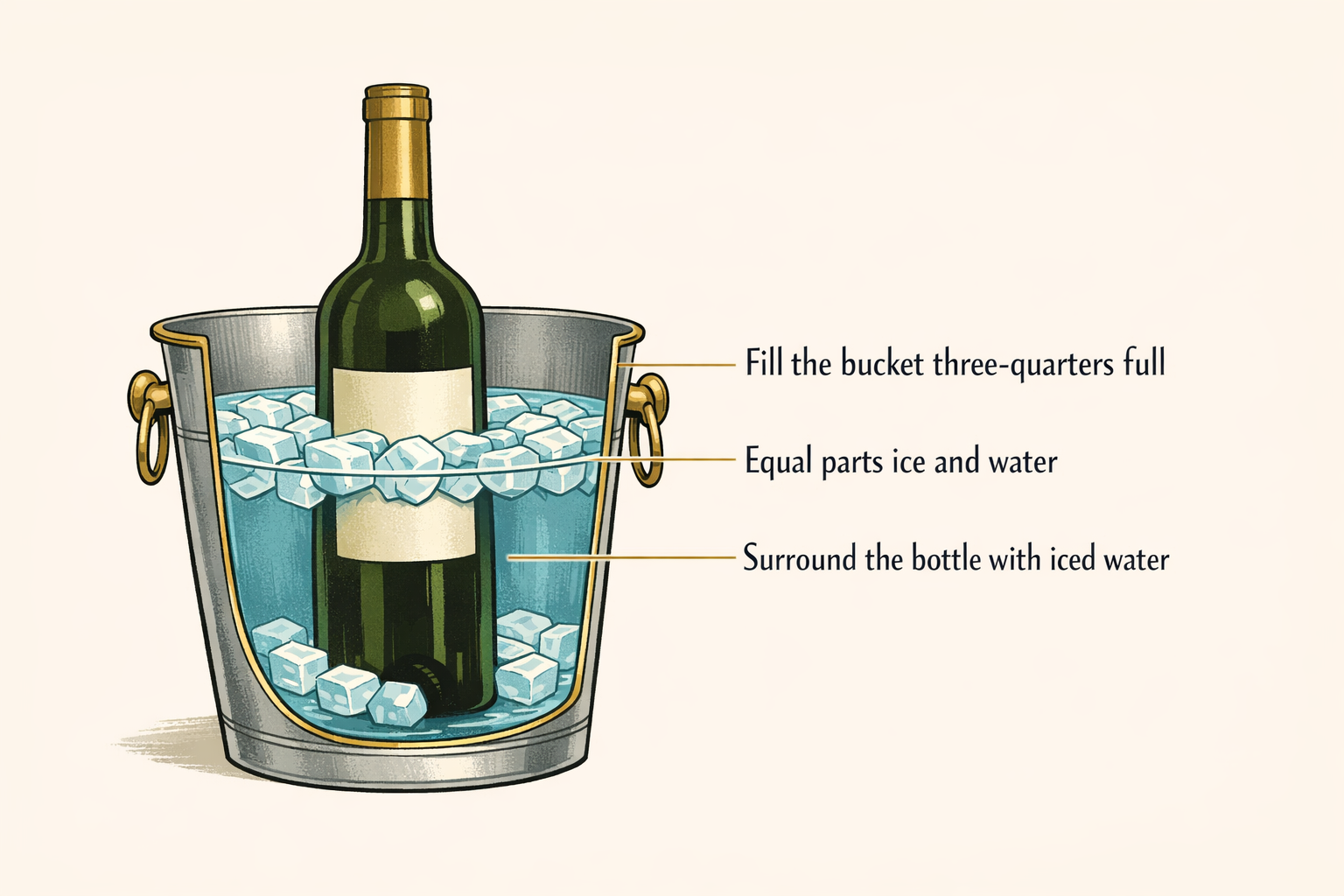
For a red in a hurry, Wine Spectator suggests about 10 minutes in a mixture of ice and cold water. For Champagne, Comité Champagne suggests 20–30 minutes in a bucket half-filled with ice and water, or a few hours at the bottom of the refrigerator. Its timing uses a different fill level from WSET’s method above and is guidance for Champagne, not a timer for every wine. For serving at the table, an insulated container or ice bucket can keep a chilled bottle cool.
How do you measure wine temperature?
Wine thermometers include models that read through the bottle and models designed to go into the mouth of an open bottle. Use one to check whether the wine has reached your chosen range, rather than treating the time spent chilling as the measurement.
How to warm wine that is too cold
Let the bottle warm naturally in the room where you will serve it. For a red already poured, gently holding the bowl of the glass in your hands can help warm it. Keep the bottle away from radiators and other direct heat, which can damage the wine’s flavors.
Can you put wine in the freezer?
Wine Spectator suggests a brief 15-minute freezer chill, but warns that forgotten wine may freeze and push the cork out. Set a timer and check the bottle when it sounds; treat this as a short cooling step, not a guarantee that the wine has reached its serving temperature.
What temperature should a wine fridge be set to?
For long-term storage, WSET recommends a controlled 50–59°F (10–15°C), with a cool, constant temperature. For wine you intend to serve, choose the relevant style’s temperature instead.
A kitchen refrigerator is not a substitute for long-term wine storage: WSET warns that prolonged fridge storage can harden corks and affect their seal. If the bottle is already open, use our opened-wine shelf-life guide to plan what to do with the rest.