A liqueur is a flavored, sweetened distilled spirit. Under US rules, the finished drink must contain at least 2.5% sugar by weight, with flavor coming from ingredients such as fruit, flowers, plants, juices or extracts.
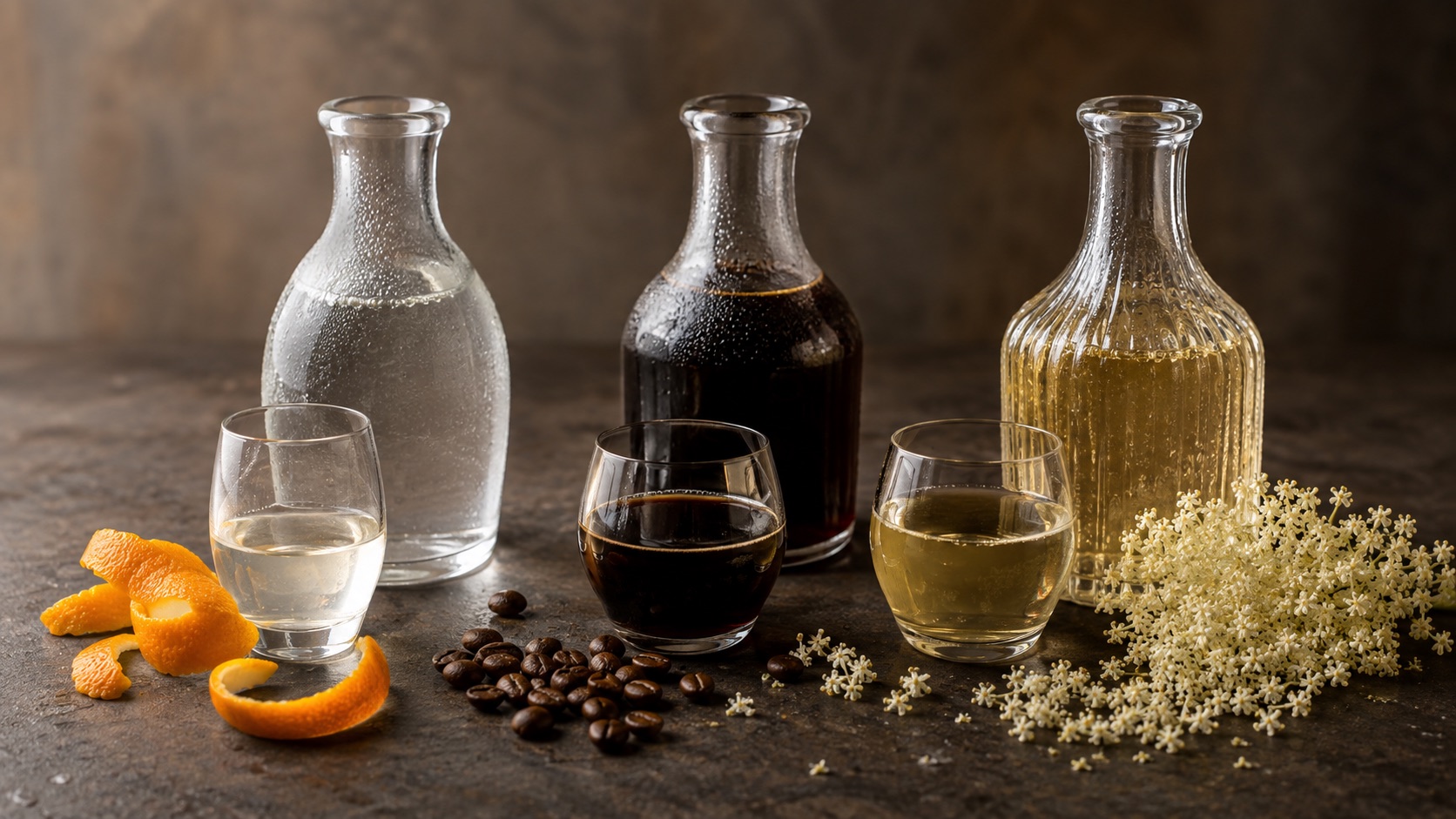
Liqueur vs liquor: what’s the difference?
“Liquor” is the broad everyday term for distilled spirits, a group that includes whisky, rum, gin and liqueurs.
How liqueurs are made
The US definition allows producers to mix spirits with flavoring materials or redistill them with those materials.
- Steeping and maceration: fruit or botanicals soak in alcohol to extract their flavor.
- Infusion: in Difford’s Guide’s description, the soaking takes place in warm alcohol.
- Percolation: alcohol passes through the botanicals to extract flavor.
- Distillation: botanicals are distilled with neutral alcohol to obtain a flavored distillate.
Sweetening is a separate part of the process: Luxardo, for example, adds water-and-sugar syrup to its Maraschino distillate.
How strong is liqueur?
There is no single strength set by the US liqueur class definition. Specific named types have their own floors: rum, gin and brandy liqueurs must be bottled at no less than 30% ABV, while “rock and rye” has a 24% minimum.
These producer-confirmed examples show the spread; they are examples, not the category’s lower and upper limits.
| Bottle | Alcohol by volume |
|---|---|
| Chambord | 16.5% |
| Baileys Espresso Crème | 17% |
| Kahlúa Original; St-Germain | 20% |
| Pallini Limoncello | 26% |
| Disaronno Originale | 28% |
| Luxardo Maraschino | 32% |
| Cointreau; Grand Marnier Cordon Rouge; Drambuie | 40% |
Read the ABV on the exact bottle rather than assuming that “liqueur” means low strength: US labels must state alcohol by volume. US proof is twice the ABV, so 20% ABV is 40 proof and 40% ABV is 80 proof.
Types of liqueur and bottles to recognize
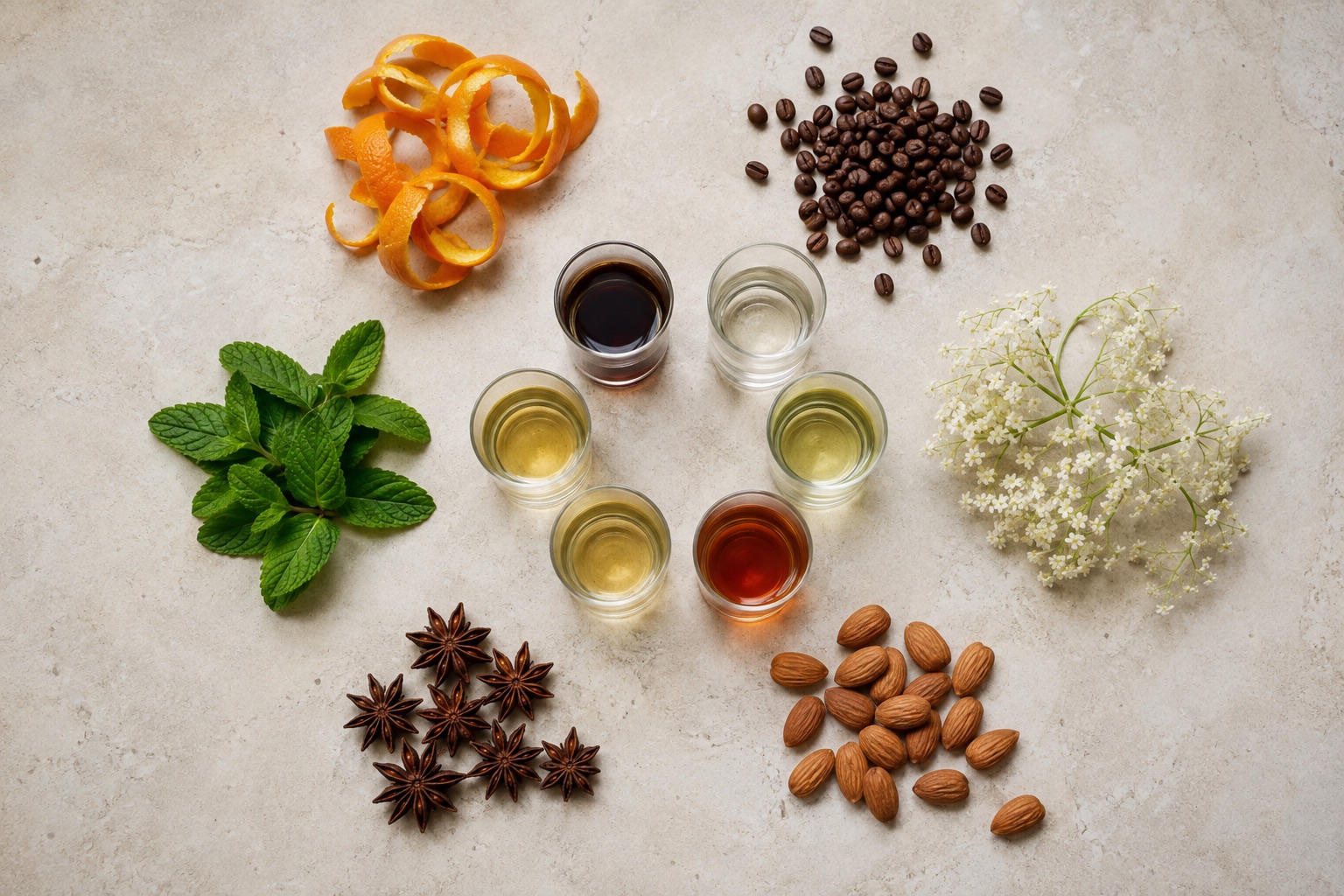
Use the families below to find a flavor you enjoy, then follow the bottle link for available sizes.
| Family | Bottle | What distinguishes it |
|---|---|---|
| Orange | Cointreau | Made using sweet and bitter orange peels. |
| Cognac and orange | Grand Marnier Cordon Rouge | Cognac, distilled orange liqueur and sugar. |
| Coffee | Kahlúa Original | Made with Arabica coffee beans and rum. |
| Floral | St-Germain | Made with fresh, hand-picked elderflower blossoms. |
| Sweet and fruity | Disaronno Originale | The Disaronno Sour combines it with fresh lemon juice and sugar syrup. |
| Bitter aperitivo | Campari | A bitter liqueur used in a Negroni. |
| Berry | Chambord | Black raspberry, citrus, vanilla and honey flavors. |
| Lemon | Pallini Limoncello | Made with Sfusato IGP lemons. |
| Cherry | Luxardo Maraschino | Made from marasca cherries; suitable neat after dinner. |
| Cream | Baileys Espresso Crème | Coffee flavor; the producer suggests adding it to hot drinks. |
| Whisky-based | Drambuie | Scotch whisky, heather honey, herbs and spices. |
Nut-style liqueurs extend beyond amaretto to flavors such as hazelnut, while chocolate liqueurs range from cocoa-led styles to creamy versions.
Other names worth recognizing are sambuca, anisette and ouzo for anise-flavored liqueurs, and crème de menthe for mint. Peppermint schnapps is also a named US liqueur type.
Reading a liqueur label
A type name is different from a brand name
“Triple sec” and “Curaçao” are US type designations for orange-flavored liqueurs, so neither name specifies one producer’s recipe. “Sloe gin” is another potentially confusing label: the US standard classifies it as a liqueur whose main flavor comes from sloe berries.
“Crème de” does not mean dairy cream
Under the US naming rule, the words following “crème de” identify the predominant flavor, rather than declaring a dairy ingredient. A cream liqueur needs a separate ingredient check: Baileys Espresso Crème, for example, explicitly lists milk and milk products, including lactose.
“Dry” still allows sugar
A US liqueur may be labeled “dry” when sugar is less than 10% of the finished product’s weight. That does not make it sugar-free: the class minimum still applies. Liqueurs cannot use “straight” as their US designation, although drinking a liqueur straight is a separate serving choice.
Flavor names are not allergen declarations
US major-allergen declarations on distilled spirits are voluntary, so a missing “Contains: milk” statement does not establish that a bottle is dairy-free. The same caution applies to nuts: “amaretto” is an almond-flavor designation. For an allergy, confirm the exact product with its producer instead of relying on a flavor name or the absence of a warning.
How to use liqueur in cocktails
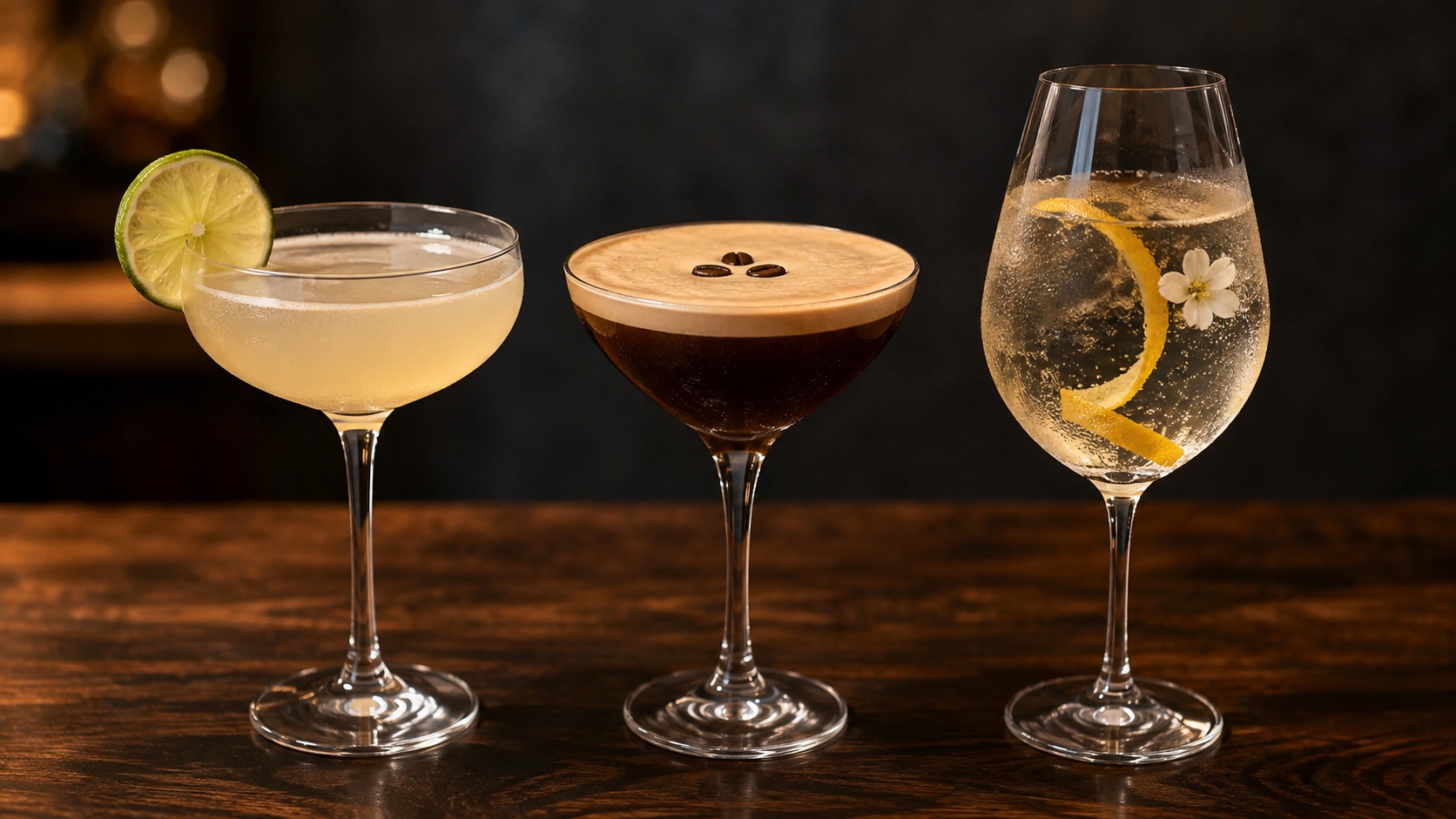
Choose a drink you want to make, then buy for that recipe rather than trying to fill every flavor category at once.
Cointreau Margarita
Combine 1 ounce Cointreau, 2 ounces blanco tequila and 1 ounce fresh lime juice in a shaker with ice. Shake until chilled, then strain into a lowball glass over ice.
Follow Cointreau’s full Margarita method, or explore our tequila mixer ideas for your next drink.
Kahlúa Espresso Martini
Use 1 part each of Kahlúa, Absolut vodka and espresso, with ice. Shake for 15–20 seconds, then strain into a Martini or cocktail glass.
For more ways to use the base spirit, browse our vodka mixers guide.
St-Germain Spritz
Combine 1½ ounces St-Germain, 2 ounces sparkling wine and 2 ounces sparkling water over ice. Stir and finish with a lemon twist.
Liqueur FAQs
Is a cordial the same as a liqueur?
On US labels, “cordial” and “liqueur” can designate the same regulated class. In common UK usage, however, cordial can mean a nonalcoholic mixer, so the word needs context.
Can you drink liqueur on its own?
Yes, when that suits the bottle: Kahlúa suggests serving its Original neat or over ice, and Drambuie also recommends an ice serve. St-Germain, by contrast, describes its liqueur as designed for mixing.
Can you use liqueur in food?
Yes: Kahlúa’s producer suggests pouring it over ice cream or using it in baking.
Does liqueur go bad after opening?
Follow the bottle’s producer guidance rather than one shelf-life rule: St-Germain recommends consuming its liqueur within six months of opening and keeping it cool, dry and away from bright light.
Choose your next bottle
Browse our liqueur selection, or ask our team to help you find a bottle for the recipe you have in mind.